
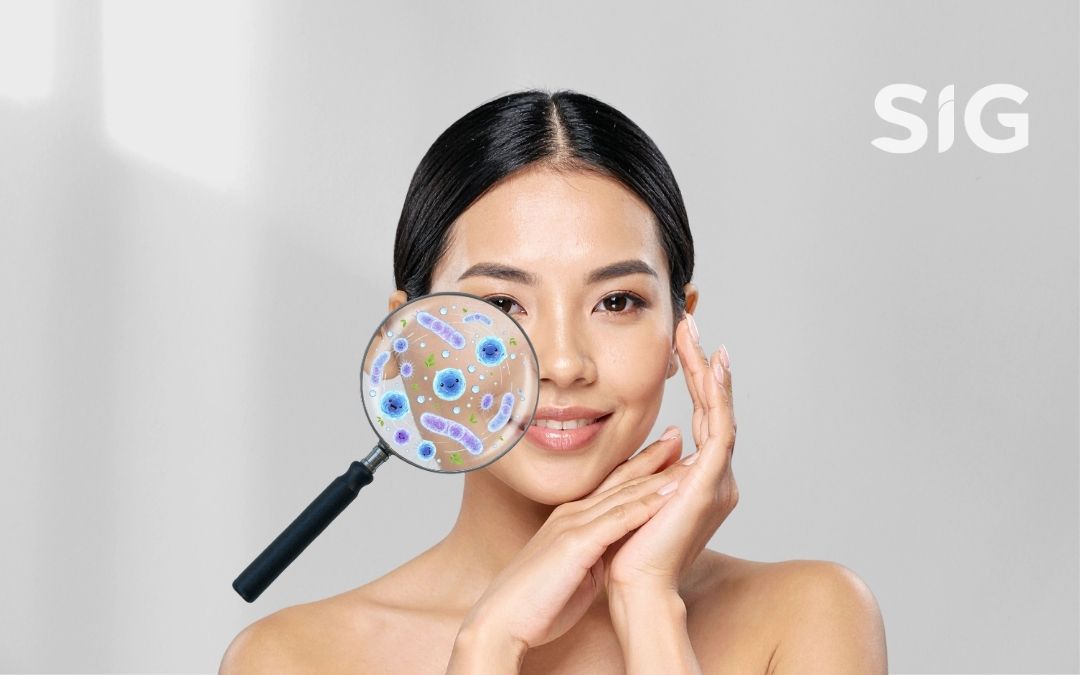
What Is the Skin Microbiome
The skin microbiome is the community of microorganisms that naturally live on the surface of human skin. These microorganisms include bacteria, fungi, viruses, and other microscopic life forms. Although they may sound alarming, most of them are actually commensal, meaning they coexist with humans and provide beneficial effects (Niedźwiedzka et al., 2024). The skin microbiome plays a crucial role in maintaining skin homeostasis, protecting against pathogens and harmful bacteria, and regulating both innate and adaptive immune responses (Oh, J., & Voigt, A. Y., 2025).
Getting to Know the Microorganisms That Live on the Skin
According to Ogai et al. (2022), the skin is not a sterile environment. On the contrary, microorganisms diversity is what keeps it healthy. Scientifically, the main microorganisms found on the skin include:
- Commensal bacteria, such as Cutibacterium, Staphylococcus, and Corynebacterium
- Fungi, primarily from the genus Malassezia
- Viruses and other microscopic microorganisms
Under normal conditions, these microorganisms live in a stable balance. However, when this balance is disrupted due to stress, the use of harsh products, hormonal changes, or disease, a condition known as dysbiosis can occur. At this stage, microorganisms that were previously harmless may trigger skin problems.
The Role of the Microbiome in Skin Health
Why Is the Skin Microbiome So Important?
- Producer of Natural Antimicrobial Substances: Certain skin microorganisms can stimulate the production of natural antimicrobial compounds that help protect the skin from harmful bacteria and pathogens (Lee & Kim, 2022).
- Maintaining Skin pH, Lipid Balance, and Hydration: The microbiome plays a role in maintaining skin pH, lipid balance, and hydration. When the microbiome is healthy, the skin barrier becomes stronger, making the skin less prone to dryness, irritation, or sensitivity (Prajapati et al., 2025).
- Regulating Immune Responses: The skin has its own immune system, and the skin microbiome helps “educate” this system to respond appropriately. This means the skin is less likely to overreact with inflammation, while still being able to defend against threats (Salava & Lauerma, 2014).
- Scientific studies conducted by the Faculty of Medicine at Brawijaya University have found a strong association between microbiome dysbiosis and skin conditions such as:
- Acne
- Atopic dermatitis (eczema)
- Psoriasis
- Sensitive and easily irritated skin
How SIG Can Help
As an SNI ISO/IEC 17025–accredited testing laboratory, SIG provides skin microbiome screening services based on Next Generation Sequencing (NGS) to comprehensively identify the composition of the skin microbiome, including microorganism types, abundance levels, and genetic functions. Supported by in-depth bioinformatics analysis and direct skin swab sampling services, SIG serves as a reliable partner for research, innovation, and science-based product development.
 EN
EN  ID
ID