
Formaldehyde
Formaldehyde in textiles, which is also commonly referred to as permanent resin, is used to provide wrinkle resistance in cotton-based textiles (100{fb5829f531bbe8a03505a61f24562bab2c90d6fe84e51abcf3fb366c55bba585} cotton or cotton-polyester blend fabrics). Long-term exposure to formaldehyde in textiles can cause skin hypersensitivity which can lead to dermatitis, which is also specifically referred to as textile dermatitis. The American Contact Dermatitis Society (ACDS) in 2015 declared formaldehyde as a contact allergen.
The European Ecolabel (Commission Decision 2002/371/EC) and the private Oeko-Tex Standard 100, which consider ecological and consumer protection criteria. The limit is 300 mg/kg for textiles not in direct contact with the skin and decorative materials in both schemes. For textiles in direct contact with the skin, Ecolabel established a limit of 30 mg/kg and Oeko-Tex Standard 100 set 75 mg/kg. Moreover, Oeko-Tex Standard 100 established a limit for textiles for babies which should release less than 20 mg/kg of formaldehyde.
How SIG can help
SIG laboratory is capable of analyzing the formaldehyde levels in textile matrices and textile toys. We offer a test method based on the standard ISO 14184-1: 2015
Method of Analysis
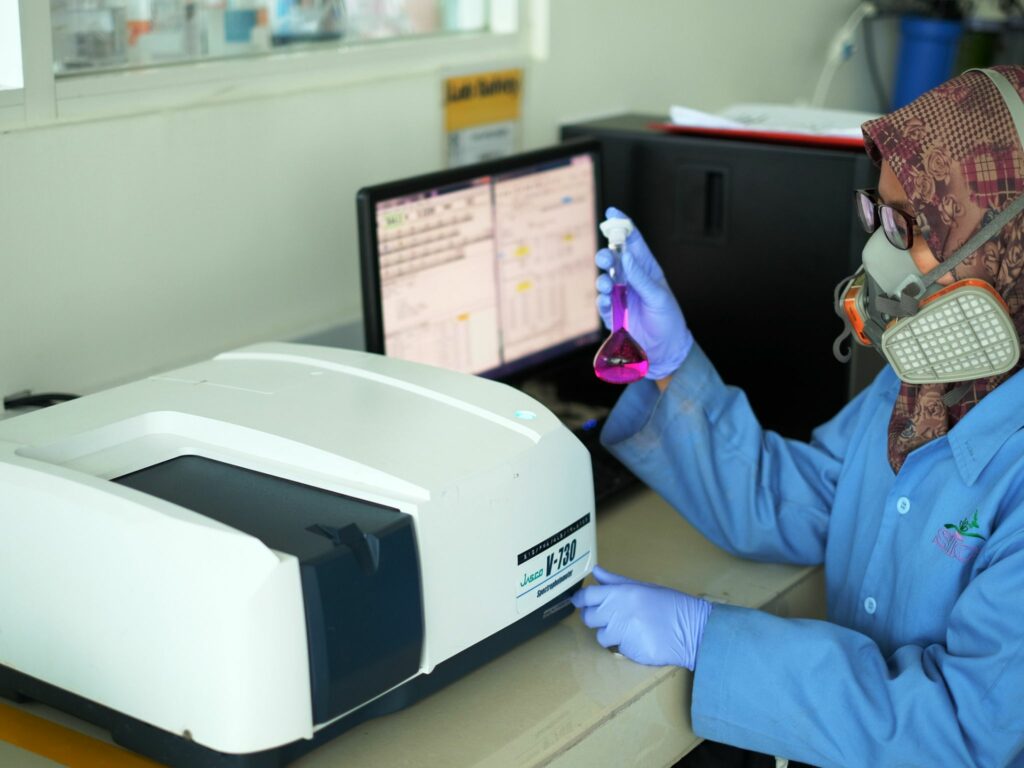
Colorimetric technique with spectrophotometer was used to measure the levels of formaldehyde extracted from the sample/fabric specimens.
Library of Knowledge
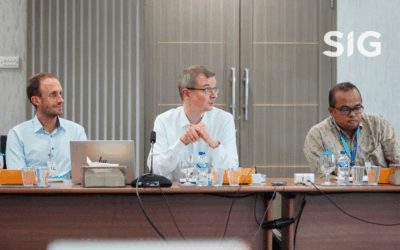
Supporting the Acceleration of Quality Infrastructure for the Circular Economy, SIG Hosts a Visit from BSN and Germany’s Physikalisch-Technische Bundesanstalt (PTB)
Bogor, July 10, 2026 – In support of the transition to a green industry and the strengthening of national quality infrastructure, SIG reaffirmed its commitment by hosting a collaborative working visit from the National Standardization Agency (BSN) and Germany’s...
Need a Unique & Complex Testing Solution? You Imagine, We Map & Analyze.
Have You Ever Faced These Challenges? ❌ Unexpected anomalies found during product manufacturing❌ Required testing parameters unavailable in any laboratory❌ A new product requires a different analytical approach❌ Buyer or regulatory requirements beyond routine testing❌...
DNA Barcoding vs WGS: Which Genetic Analysis Method Is Right for Your Needs?
What Is DNA Barcoding? DNA barcoding is an identification method that uses specific genetic markers to distinguish and confirm the identity of a species. This analysis is performed using Sanger Sequencing technology, which produces high-quality DNA sequences with...
SIG Laboratory
Graha SIG, Jl Rasamala No. 20, Taman Yasmin, Bogor, Jawa Barat 16113.
Phone. +62 251 7532 348
WhatsApp. +62 82 111 516 516
Email. marketing@siglaboratory.co.id
SIG Jakarta
Jl. Percetakan Negara No. 52 B RT 006 / RW 001, Rawasari, Cempaka Putih, Jakarta Pusat 10570.
Phone. +62 21 2147 9292
SIG Medan
Jl. Bunga Asoka, Ruko Komp. Asoka Raya Residance No. 1, Medan Selayang, Sumatera Utara 20133,
WhatsApp. +62 822 7207 9665
Email. salesmedan.sig@saraswanti.com
SIG Surabaya
AMG Tower Lt. 12, Jl. Dukuh Menanggal 1-A, Gayungan, Kota Surabaya, Jawa Timur 60234.
Phone. +62 31 8253 1288
WhatsApp. +62 81 8885 165
Email. marketing@sigsurabaya.com
SIG Semarang
Jl. Kanfer Raya Blok R No. 4 Pedalangan, Kec. Banyumanik, Kota Semarang, Jawa Tengah 50268.
Phone. +62 24 7004 0541
WhatsApp. +62 812 9000 5165
Email. cs.sigsmg@saraswanti.com
SIG Yogyakarta
WhatsApp. +62 896 4856 9422
Email. arifin.sig@saraswanti.com
Operational Hours
Monday to Friday
08.00 - 17.00 WIB.


FOLLOW US
 EN
EN  ID
ID