
Phenol Coefficient
To use disinfectants effectively, it is necessary to know the strength of their power to kill microbes by using phenol as a comparison. Phenol is a disinfectant that is effective in killing germs. Phenol coefficient is the ratio of the measure of the potency of an antimicrobial agent compared to phenol as a reference.
Phenol is used as a standard because phenol is often used to destroy microorganisms. The phenol coefficient value less than 1 indicates that the antimicrobial compound is less effective than phenol. Conversely, if the phenol coefficient is more than 1, the antimicrobial material is more potent than phenol. The phenol coefficient is determined by dividing the highest dilution of phenol, which destroys microorganisms within ten minutes but does not destroy within five minutes. The highest dilution of the antimicrobial agent that kills microorganisms in ten minutes but not in five minutes.
How SIG can help
SIG Laboratory can perform phenol coefficient analysis in disinfectant.
Microorganisms can be tested:
- Bacillus cereus
- Bacillus sp.
- Bacillus subtilis
- Enterobacter aerogenes
- Enterococcus faecalis
- Escherichia coli
- Listeria monocitogenes
- Pseudomonas aeruginosa
- Salmonella sp
- Salmonella Typhimurium
- Shigella sp
- Staphylococcus aureus
- Streptococcus sp.
Method of Analysis
The method used to determine the effectiveness of the disinfectant is the phenol coefficient analysis method.
The reference for the phenol coefficient test is AOAC 955.11. The principle of this method is finding the highest dilution in the phenol solution and the disinfectant solution so that both can kill microbes within 10 minutes, but not in 5 minutes. The highest dilution results obtained from the disinfectant are then compared with phenol to get the phenol coefficient value.
Library of Knowledge
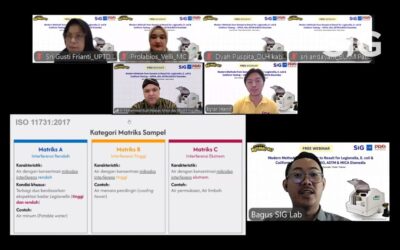
SIG Addresses Industrial Water Safety Challenges through ISO-Standardized Microbial Testing at the NgoMik! #17 Collaborative Webinar
Bogor, September 3, 2026 – Bogor, September 3, 2026. As part of its efforts to introduce the latest methods for microbiological water testing to laboratory practitioners in Indonesia, SIG joined Prolabios Mitra Analitika and the Center for Public Health Laboratory (BB...
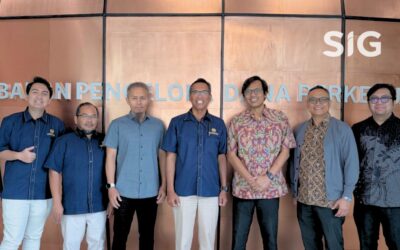
SIG Holds Audience with BPDP, Pushes for Synergy to Strengthen Competitiveness of Indonesia’s Palm Oil Industry
Jakarta, September 2, 2026 - SIG held an audience with the Plantation Fund Management Agency (Badan Pengelola Dana Perkebunan/BPDP). The meeting served as a momentum for SIG to introduce its laboratory capabilities in supporting the strengthening of the plantation...
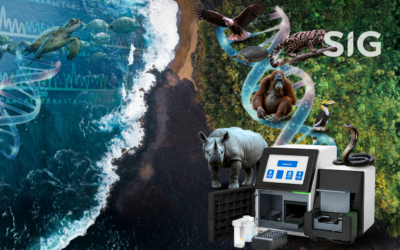
Reading Life Through DNA
Discover Environmental Biodiversity Through eDNA SIG now offers Environmental DNA (eDNA) Analysis powered by genomics technology to help identify biological traces present in the environment. “What lives in this environment? Now, SIG can read it through DNA.” Body...
SIG Laboratory
Graha SIG, Jl Rasamala No. 20, Taman Yasmin, Bogor, Jawa Barat 16113.
Phone. +62 251 7532 348
WhatsApp. +62 82 111 516 516
Email. marketing@siglaboratory.co.id
SIG Jakarta
Jl. Percetakan Negara No. 52 B RT 006 / RW 001, Rawasari, Cempaka Putih, Jakarta Pusat 10570.
Phone. +62 21 2147 9292
SIG Medan
Jl. Bunga Asoka, Ruko Komp. Asoka Raya Residance No. 1, Medan Selayang, Sumatera Utara 20133,
WhatsApp. +62 822 7207 9665
Email. salesmedan.sig@saraswanti.com
SIG Surabaya
AMG Tower Lt. 12, Jl. Dukuh Menanggal 1-A, Gayungan, Kota Surabaya, Jawa Timur 60234.
Phone. +62 31 8253 1288
WhatsApp. +62 81 8885 165
Email. marketing@sigsurabaya.com
SIG Semarang
Jl. Kanfer Raya Blok R No. 4 Pedalangan, Kec. Banyumanik, Kota Semarang, Jawa Tengah 50268.
Phone. +62 24 7004 0541
WhatsApp. +62 812 9000 5165
Email. cs.sigsmg@saraswanti.com
SIG Yogyakarta
WhatsApp. +62 896 4856 9422
Email. arifin.sig@saraswanti.com
Operational Hours
Monday to Friday
08.00 - 17.00 WIB.


FOLLOW US
 EN
EN  ID
ID