

In recent years, the label “BPA Free” has become increasingly common on various food and beverage packaging products. This label emerged as a response to growing concerns about Bisphenol A (BPA), a chemical compound known to potentially disrupt the human hormonal system (Xu et al., 2023).
As an alternative, industries began using other compounds with similar chemical structures, one of which is Bisphenol S (BPS). This compound has been considered a more stable and potentially safer substitute compared to BPA. However, as scientific research continues to evolve, several studies have begun to indicate that Bisphenol S may also pose potential health risks, meaning its presence in everyday products deserves closer attention (Rochester & Bolden, 2015).
Bisphenol S in Food and Drink Packaging
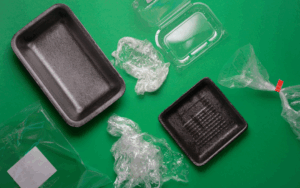
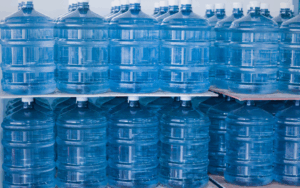
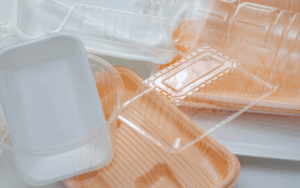
Bisphenol S (BPS) is a synthetic chemical compound belonging to the group of bisphenol analogues, which are derivative compounds that share a chemical structure similar to Bisphenol A. This compound is widely used in the production of plastics and various packaging materials, including food and beverage packaging marketed as BPA free products.
BPS began to be used as an alternative to BPA because of its greater chemical stability when exposed to heat and light. In addition, it is considered less likely to release monomers into food or beverages compared to BPA (Rochester & Bolden, 2015).
Previous studies conducted on humans have also shown that BPS exposure can be detected through urine samples. Research has found that approximately 81% of individuals in the United States and several Asian countries have detectable levels of BPS in their urine, indicating that exposure to this compound is relatively common in the general population (Thoene et al., 2020).
Health Risks of Bisphenol S
BPS belongs to the group of Endocrine Disrupting Chemicals (EDCs), which are substances capable of mimicking or interfering with the natural hormones in the human body. This compound is known to have estrogenic and anti androgenic activity, which may affect various biological processes such as cell growth, cell differentiation, and reproductive functions (Rochester & Bolden, 2015).
Several studies on experimental animals have shown that BPS exposure may cause reproductive system disturbances, including reduced sperm quantity and quality, disruption in ovarian follicle development, and changes in estrogen hormone responses (Chen et al., 2017).
In addition, BPS has also been linked to obesogenic effects, meaning the compound may promote fat tissue formation by activating preadipocyte cells and increasing fat accumulation in the body. In some cases, the biological effects of BPS have even been reported to be similar to or stronger than those of BPA, making the use of this compound as a BPA substitute an ongoing concern in the fields of food safety and environmental health.
Regulatory Framework
- International Regulations
The use of bisphenol compounds in materials that come into contact with food has become a concern for regulatory agencies around the world.
In the European Union, for example, the use of BPA in plastic materials that come into contact with food is regulated under Regulation (EU) No. 10/2011, which sets migration limits for certain chemical substances from packaging into food. However, specific regulations for BPS are still evolving, as research on the safety of this compound continues to develop (Vilarinho et al., 2019).
- Regulations in Indonesia
In Indonesia, the supervision of materials used in food packaging falls under the authority of the National Agency of Drug and Food Control (BPOM).
Several regulations govern the safety of food packaging, including:
- BPOM Regulation No. 20 of 2019 on Food Packaging
This regulation emphasizes that materials used in food packaging must meet safety standards and must not release hazardous substances into food in amounts that could endanger human health. Although BPS is not yet specifically regulated within this regulation, the general safety principles for food contact materials still require risk assessments for chemical substances that may migrate from packaging into food.
How SIG Can Help
As a testing laboratory accredited under SNI ISO/IEC 17025, SIG provides quantitative testing for Bisphenol S contamination that may migrate from Polycarbonate (PC) and/or PET (Polyethylene Terephthalate) food packaging. The analysis is conducted using High Performance Liquid Chromatography (HPLC) in accordance with BS EN 13130-1:2004 and SNI 7626-1:2017 standards.
For more information about testing services available at SIG, please contact us or reach us via WhatsApp at +62 821 1151 6516, visit our website at siglaboratory.com, or come directly to our office at Graha SIG, Jl. Rasamala No. 20, Taman Yasmin, Bogor
West Java 16113, Indonesia.
 EN
EN  ID
ID